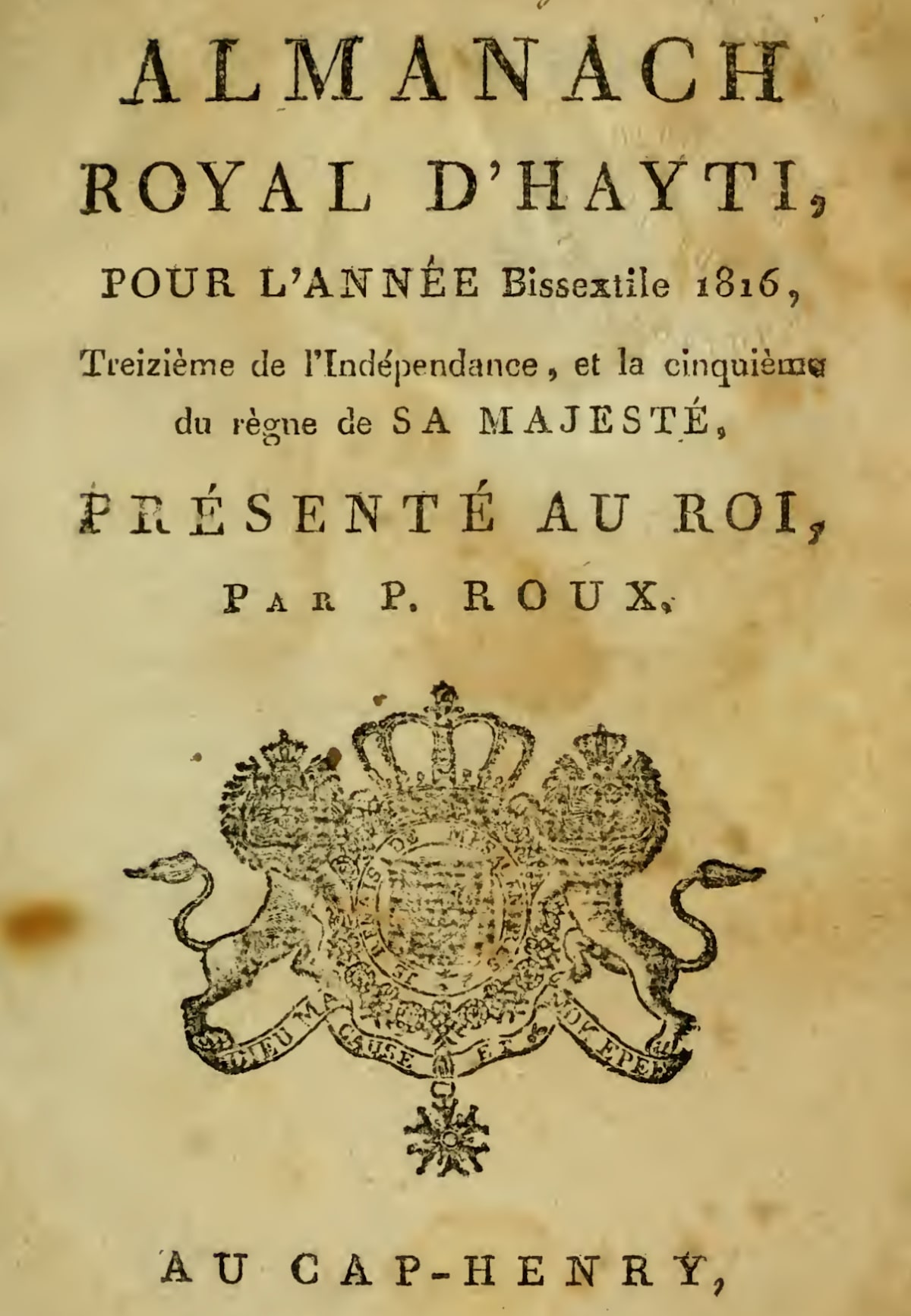
By MARLENE L. DAUT
King Henry always signed his name with a y. However, many Christophe chroniclers, both in Haiti and abroad, especially those who wrote in the twentieth century, have adopted the more common French spelling "Henri" when writing about the Haitian king. However, in my biography of Christophe, The First and Last King of Haiti, I insist upon using the correct historical spelling of “Henry,” except for when directly quoting others.
Although those spelling his name with an i not infrequently claim that Christophe spelled his name Henri before adopting the royal Henry, this is incorrect.
Christophe’s earliest known signatures date from the 1790s, as shown on documents I unearthed in French archives and reproduced in my book. In these letters, written long before he became king, Christophe clearly signed his name with a y. The main evolution over time seems to have been that his signature became increasingly fancy as he rose through the ranks of the military and then the Haitian government.
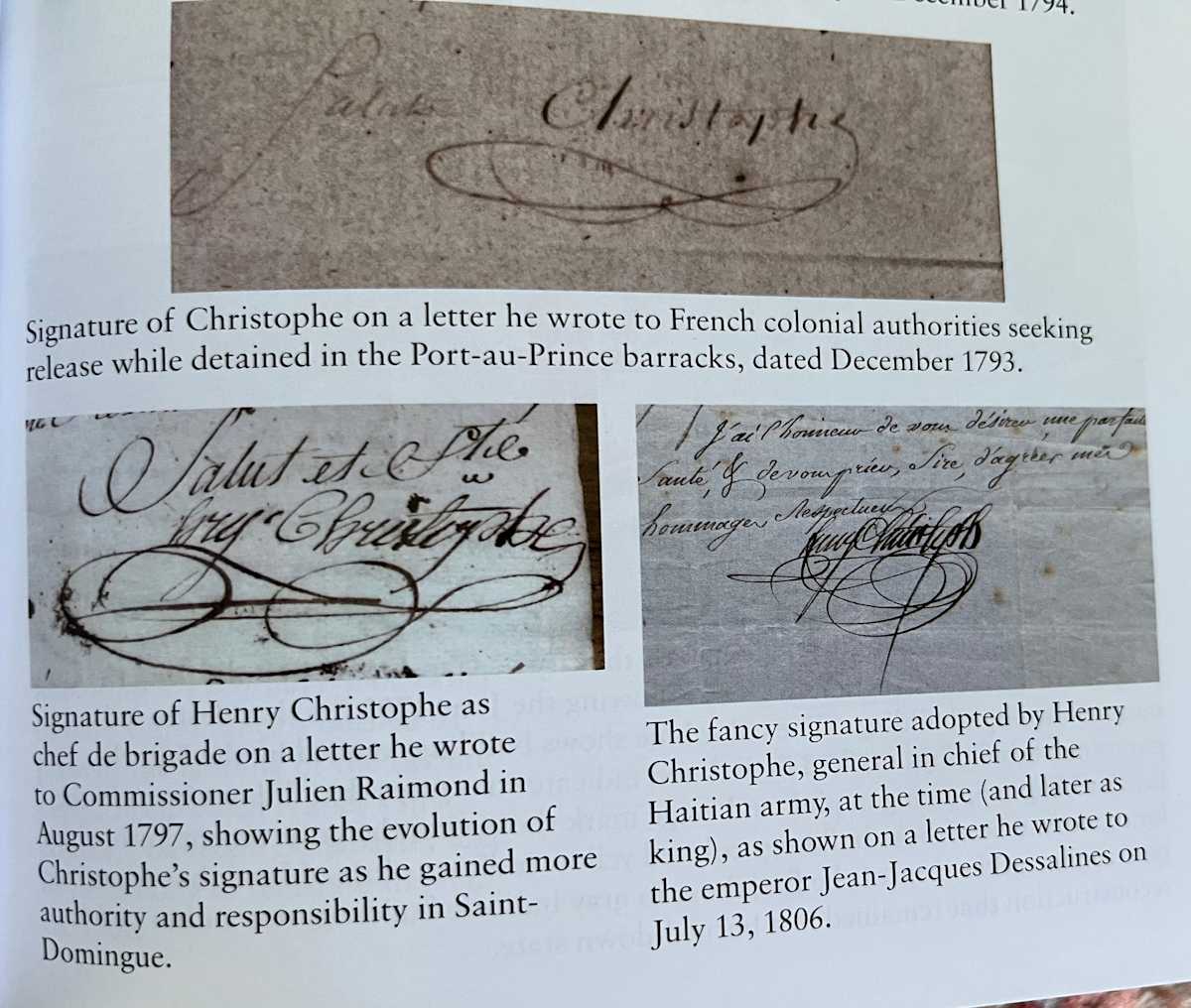
(Christophe’s signatures, as reproduced in The First and Last King of Haiti)
Another interesting point to consider is that though many believe that Henry with a y constitutes the British spelling, it was also a variation in French spellings of the name. Notably, in Saint-Domingue, we find the French ordonnateur, or financial administrator, Henry Perroud; and as documented in my book, I found a record of another Henry Christophe (again, spelled with a y) who was born in Port-au-Prince in the mid-eighteenth century. I should also note that France had four Kings called Henry and they all spelled their names with a y as well.
Now, I don’t necessarily object to contemporary writers spelling Christophe’s first name as Henri (even though it is historically inaccurate!), but I do think that both those who choose to use the more common French spelling, Henri, and those who opt for the spelling Christophe used, Henry, should avoid editorializing about this choice without evidence. That is to say, we must avoid making definitive statements based largely on conjecture about why Christophe used the royal French spelling.
Speculation has come from both directions. For example, it is also common for some to claim that Christophe used a British spelling because he was born in the British colony of Grenada. It bears repeating, however, that this too is unconfirmed. The reality is that we simply don’t know why Christophe spelled his name the way he did.
All we know for certain is that the earliest records show Christophe spelled his first name with a y. And the main point I am making is, in fact, just that: we should spell Christophe’s name the way he did!
I also spell the names of other revolutionary figures who appear in my book the way they signed their names, as in the cases of Jacques Morpas (written by others at times as “Maurepas”), Charles Belair (written also as “Bélair” with an accent), Moyse (sometimes written as “Moïse”); Clervaux (written also as "Clairvaux"); and in what is another notorious case of wild spelling variations, I spell Toussaint’s last name without an apostrophe, as in Louverture, because he did, while many eighteenth- and nineteenth-century chroniclers and writers spelled his name “L’Ouverture,” a practice adopted by some twentieth-century and contemporary authors, too.
In a less clear-cut vein, in the nineteenth century Haiti, was frequently spelled both inside and outside the country with a y, as in “Hayti.” Why did early Haitians spell the name of their country with a y, whereas later Haitians opted for using an ï? Who knows! But it sure is interesting to ponder.
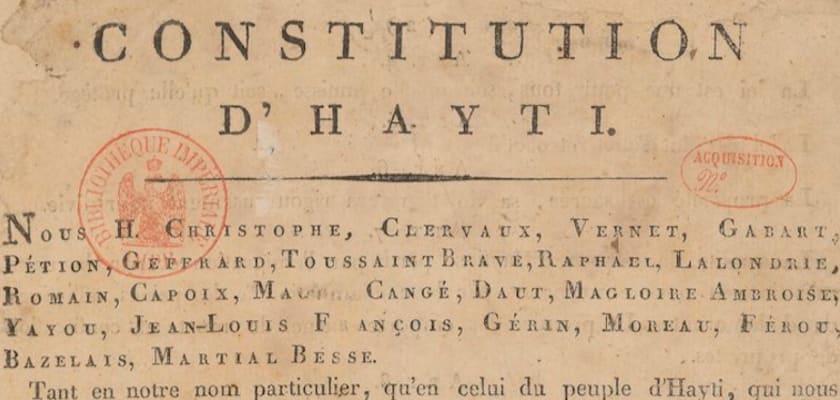
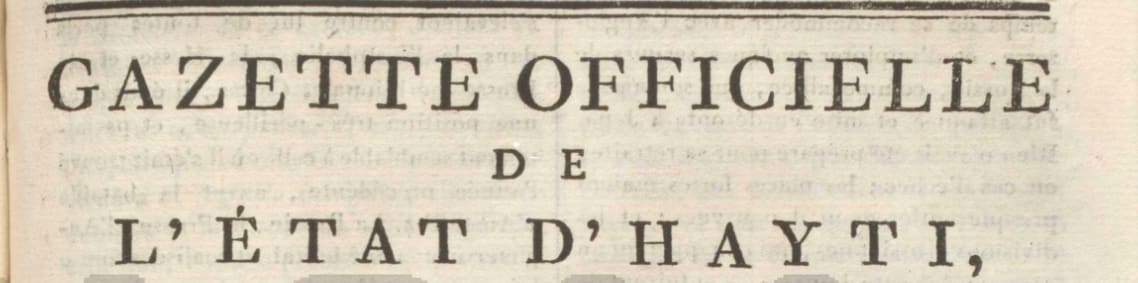
(1807 issue of the Christophean state's official newspaper issued while Christophe held the title of President and Generalissimo in northern Haiti)
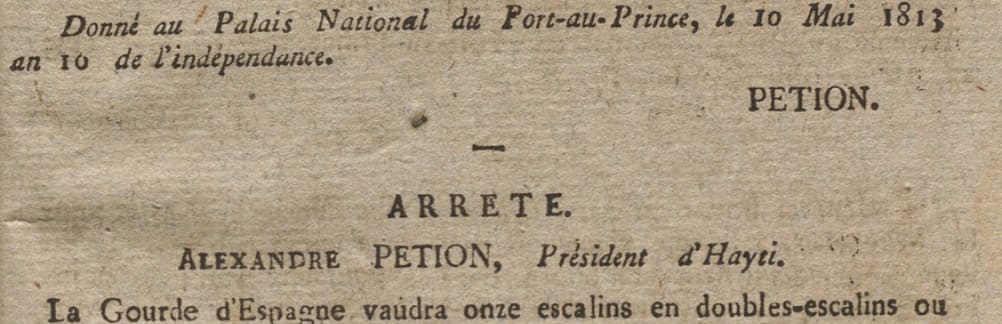
(An 1813 decree signed by President Alexandre Pétion, as reproduced in the state-run newspaper, Le Télégraphe)
How to cite this article: Marlene L. Daut, "King Henry Always Signed His Name with a Y, and other Spelling Eccentricities of Early 19th-Century Haiti," King of Haiti's World Blog, April 24, 2026. <https://marlenedaut.com/blog/king-henry-always-signed-his-name-with-a-y-and-other-spelling>