Daut graduated from Loyola Marymount University with a B.A. in English and French in 2002 and went on to teach in Rouen, France as an Assistante d’Anglais before enrolling at the University of Notre Dame, where she earned a Ph.D. in English in 2009. Since graduating, she has taught Haitian and French colonial history and culture at the University of Miami, the Claremont Graduate University, and the University of Virginia, where she also became and remains series editor of New World Studies at UVA Press. In July 2022, she was appointed as Professor of French and Black Studies at Yale University.
She lives in the New Haven, CT area with her spouse and children.
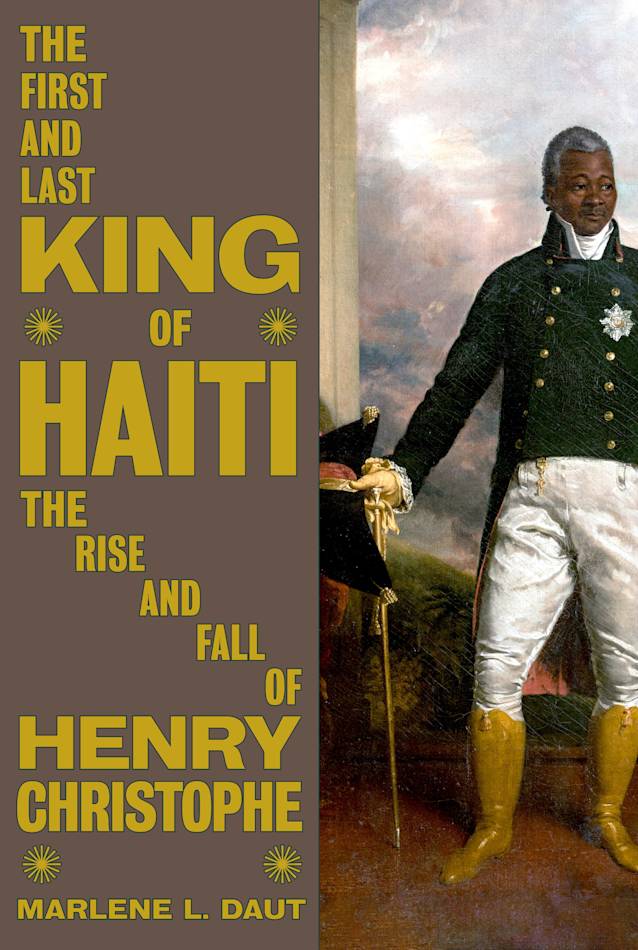
An award-winning author, scholar, and professor specializing in Haitian history and culture, Marlene L. Daut's most recent book, The First and Last King of Haiti: The Rise and Fall of Henry Christophe(Knopf, 2025), a finalist for the Cundill History Prize, explores the fascinating life of Haiti’s only king while delving into the complex history of a 19th-century Caribbean monarchy. Her other books include Tropics of Haiti: Race and the...
The dramatic story of a pivotal figure in the Haitian Revolution, who shook the Atlantic world to its core.
Born to an enslaved mother in Grenada, Henry Christophe first fought to overthrow the British in North America, before joining the Black freedom fighters of Saint-Domingue in their quest to gain independence from France. But, at one point,...
After waging a thirteen-year revolution against slavery in the French colony of Saint-Domingue, the island’s Black freedom fighters declared their independence on January 1, 1804. In the country’s first constitution, issued one year later, the newly renamed Haiti subsequently became the first nation in the modern world to permanently abolish slavery. In...
In 2002, Haiti’s former president Jean-Bertrand Aristide argued that France should pay his country US$21 billion.
The reason? In 1825, France extracted a huge indemnity from the young nation, in exchange for recognition of its independence.
April 17, 2025, marks the 200th anniversary of that indemnity agreement. On Jan. 1 of this year, the now-former president of Haiti’s Transitional Presidential Council, Leslie Voltaire, reminded France of this call when he requested that France “repay the...
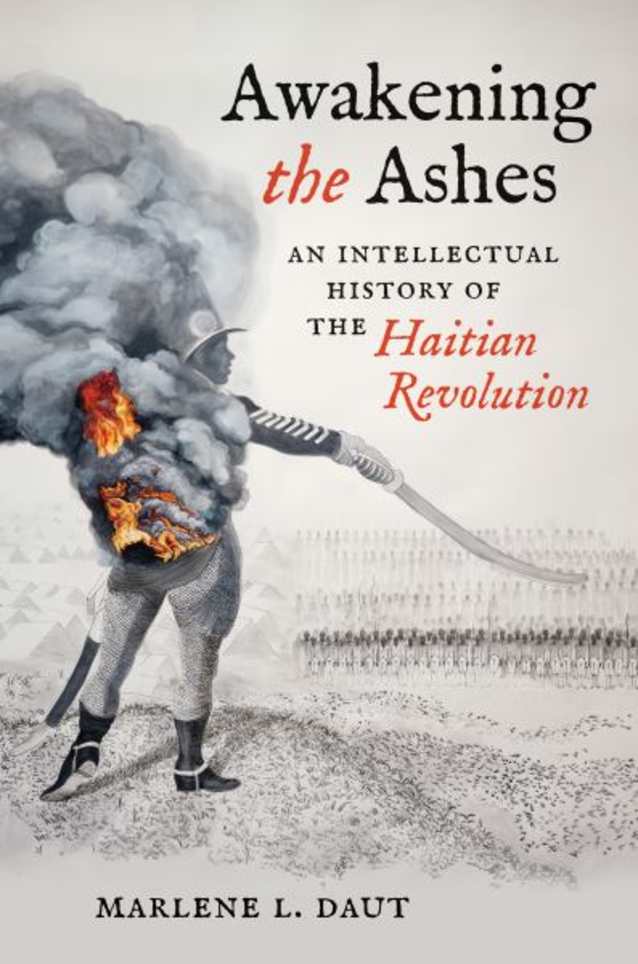
In this series commissioned by Marlene L. Daut, scholars reveal what 220 years of Haitian independence means for how we tell the story of abolition and the development of human rights around the world.
The first land to be colonized in the Americas was Haiti. Europeans first enslaved native Americans and captive Africans there, too. But the first permanent abolition of slavery also happened on Haiti, in 1804: 220 years ago this month. Such abolition only occurred in the rest...
Next week, on February 25, I will be appearing at Museum of the American Revolution in Philadelphia as a part of the Read the Revolution series alongside my good friend and colleague Julia Gaffield. We will certainly be discussing the American Revolution, whose semiquincentennial the museum and other U.S. cultural institutions are celebrating this year (and in whose storied Battle of Savannah Henry Christophe fought). What we’ll really be there to discuss, however, is Haiti...
On February 6, 1928, the New York Times published an article written from the city of Port-au-Prince by the famous aviator Colonel Charles Lindbergh. Titled “Lindbergh Studies Ruins in Haiti While on His Flight to Its Capital,” Lindbergh, most famous for having flown the first non-stop transatlantic flight in 1927, described how taking a northwest route from Santo Domingo, he flew over the city of Santiago in the Dominican Republic before heading in the direction of the...
“I come back to the deadly seriousness of intellectual work. It is a deadly serious matter.”—STUART HALL, “Cultural Studies and its Theoretical Legacies” (1992)
This January has certainly been an eventful one, both politically, and perhaps, in a cosmic attempt to match the ongoing governmental mayhem we are facing, meteorologically as well. We recently had a major winter storm here in Connecticut that dumped about 18 inches of snow, sleet, and ice on the city where I live,...
Dr. Julia Gaffield, Associate Professor of History at William & Mary, and Dr. Marlene L. Daut, Professor of French and African Diaspora Studies at Yale University, will join the Museum on Wednesday, February 25 to present the second public program in the Museum’s 2025-2026 Read the Revolution Speaker Series with a joint lecture and discussion inspired by their recent biographies on Haitian...
“So What’s Your Book About?”: A Branding Mini-Clinic
March 5: 12:45 PM
Your book might be brilliant, but can you explain the gist of it to a stranger in one sentence? This mini-clinic will help writers clarify their message to better position their work for media and public attention. Publicist Nanda Dyssou and four authors who have effectively branded and pitched their books, generating lots of media, event, and public interest, will guide attendees in inventing a tagline and an elevator pitch...
Join us for the next program in our "Declaration Deep Dive" series, a collaboration between KTM&HC and Ridgefield Library to commemorate America 250.
On Sunday, March 15 at 2pm, Dr. Marlene Daut, professor of French and African American Studies at Yale University, will discuss her research on the Haitian Revolution (1791-1804), including its connections to the Declaration of Independence (1776). Details coming soon!