By MARLENE L. DAUT
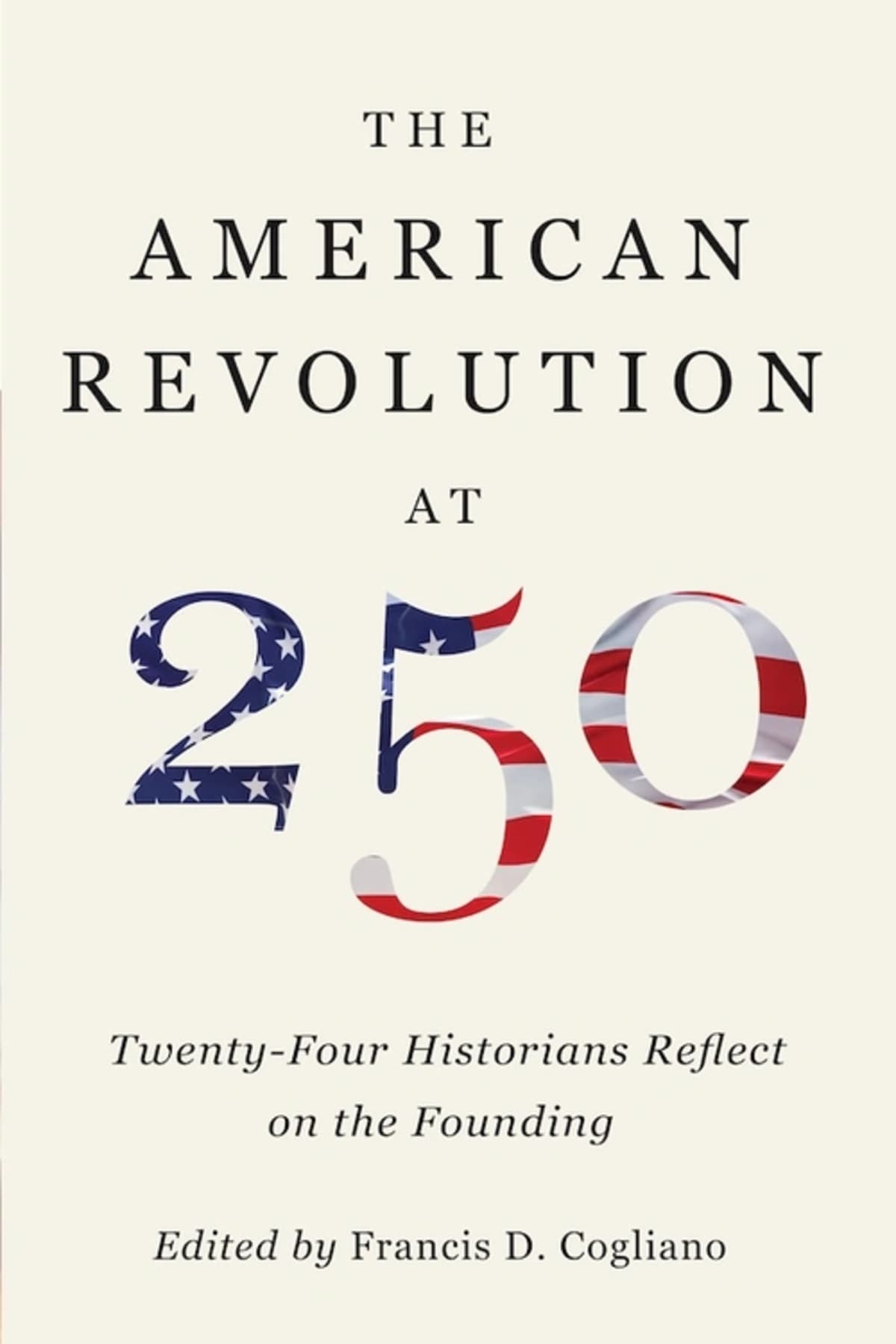
Today, April 3, marks the official publication date of The American Revolution at 250: Twenty-Four Historians Reflect on the Founding, edited by Francis (Frank) D. Cogliano.
My essay, which I truly hope will spark meaningful conversation, is called “What is the American Declaration of Independence at 250 to Me?” I wrote this at a particularly turbulent time in my life and career, which I think you’ll see reflected in the short excerpt that I am pleased to share below. Read to the end to see a brief photo essay.
I was a professor of Black studies at the University of Virginia during the August 11 and 12, 2017, white supremacist rallies, locally dubbed the “Summer of Hate.” Before taking up an appointment at the storied Carter G. Woodson Institute, I had taught for seven years at the Claremont Graduate University in Claremont, California. When I told family and friends that I was contemplating taking a new job at UVA, reactions seemed mixed. My mother worried that her grandsons, then aged six and four, might encounter more racism in a Southern state like Virginia than they would in Southern California. “It’s not like the KKK just walk down the street every day,” I quipped, reminding her that Orange County, where I was partly raised, is home to multiple and equally menacing neo-Nazi skinhead gangs.
Then, in July, shortly after we moved to Charlottesville, a small KKK rally occurred in the middle of the city. The event was sparsely attended, with more counterprotesters than white supremacists present, but it marked the second visit to the city by a white supremacist group in as many months (a white supremacist tiki torch rally took place in May, just before we moved). Around this time, I had a conversation with another new faculty member who had yet to move to town. “I am not really impressed with the place that will be my future residence,” she said. I wasn’t either, but lost in the commotion of my own big move across the country, which took me far from my family and most of my friends, I tried to put out of my mind the fact that the KKK did in fact periodically march down the street of my new hometown.
Eventually, Friday, August 11 arrived. We had family visiting from France and Vermont. I happened to be away at a conference in Denmark. The third of the white supremacist rallies had been planned for months. I feared leaving my family in such potentially perilous circumstances—at the July KKK rally, the police had pepper-sprayed the counterprotesters, creating a violent scene—but away I went at my husband’s urging. That night I watched in horror from thousands of miles away as hundreds of white men wearing white polo shirts and khaki pants (instead of white robes and pointed masks) marched through the University of Virginia’s famous lawn carrying lighted tiki torches. Many of the men were carrying signs that said things like, “You will not replace us.” Others repeated the Nazi chant “blood and soil,” while still more waved Confederate flags and other inveterate symbols of antisemitism, anti-Blackness, and general white supremacy, some of them repurposed, as in the case of the Detroit Red Wings logo. Although this event was highly publicized before it occurred, with its organizers citing the right to free speech and peaceful assembly, neither the university, nor the City of Charlottesville, took steps to prevent such a threatening display of white power.
As if August 11 were not an appalling enough display of brazen racism, August 12 saw more racists calling themselves “white nationalists” descend upon the city. This time, they marched down Market Street, all the way to a park housing a statue of the military leader of the Confederacy, General Robert E. Lee, where they met yet more counter protesters. After the rally had finished, the counterprotesters and white supremacists alike dispersed. Many of them found their way to a large outdoor retail center known colloquially around town as “the mall.” While the mall is mostly a pedestrian environment, there are two streets that cars can use to pass through. On one of them, counter protester Heather Heyer (a white woman) met her death when “avowed white supremacist” James Alex Fields decided to plow his car into the crowd that had gathered on that street. His car struck Heather, killing her, while he injured nearly two dozen more. Some of the other white supremacists began to attack and beat the counter protesters, many of whom were permanently maimed. Two Virginia state troopers also lost their lives when their helicopter crashed after they had completed surveillance of the protests.
Before the deadly days of August 11 and 12, most people in the United States, and certainly most living overseas, had never even heard of Charlottesville. After that fateful weekend, many people would never forget it. At the airport in Copenhagen, a guard examining my travel documents as I checked in for my return flight asked me where I lived. “Charlottesville, Virginia,” I said, trying to hide my panic-stricken face, as recognition lighted his. “Ohhh,” he said. Just as Columbine and Sandy Hook have become indelible symbols of the intractability of US gun violence, Charlottesville immediately became shorthand for one of the most hateful displays of racism in modern US history.
Upon my return, as I fielded phone calls from concerned family and friends, most were confused about why this racist mob had chosen Charlottesville and UVA. I explained that the city had recently approved the removal of a General Robert E. Lee statue, after a petition was brought forward by Charlottesville High School student Zyahna Bryant. The city’s determination to remove the statue immediately led to a lawsuit intended to block its removal. This brought national attention to Charlottesville and hate mail to Bryant and city officials, as protecting the statue quickly became the cause célèbre of myriad white supremacist groups, national and local. (Up until its ultimate removal in 2021, an armed faction guarded on rotation the park where the Lee statue stood.)
Yet the conclusion that I have drawn after many years of reflection on that tragic weekend is that none of this was really about the statue. It was the sad outcome of the United States’ inability to reckon with its founding in white supremacy. UVA and Charlottesville in many ways remain merely the most arresting monuments of that inability and so the most fitting place, perhaps, for its unabashed eruption into public consciousness.
You’ll have to get your hands on the book to read the rest of my essay, in which I discuss, among other things, Maurie McInnis's powerful book Educated in Tyranny: Slavery at Thomas Jefferson's University (2019), as well as the incoherence that exists between the praiseful Jefferson statue, which stands prominently on the campus grounds, and UVA’s 2020 installation of a remarkable but devastating monument to the enslaved laborers who built the university.
In lieu of the rest of the essay, I will leave you with its final two paragraphs and a few photos from the aforementioned monument:
"Passing by the Jefferson statue on UVA’s grounds one day nearly two years after the Summer of Hate, just following my promotion to full professor, [...] I wondered how I got dropped into this place, at a university whose founder could never have even conceived of my promotion to the highest ranks of university faculty, let alone have approved of it. I marveled at how it is that so many of us live in countries where the cruel and inhumane see their rise to power praised in stone, while those they irreparably harmed to get there are relegated to the status of collateral damage.
Walking across the grounds, I could only shake my head as I thought about the way UVA’s Black students, faced with numerous kinds of racial conflict, often evoke the history of Robert Bland, the first Black graduate (though not the first Black student) of the university. ‘Bobby stayed, then I can stay’, they console one another and themselves. But stay, I did not."
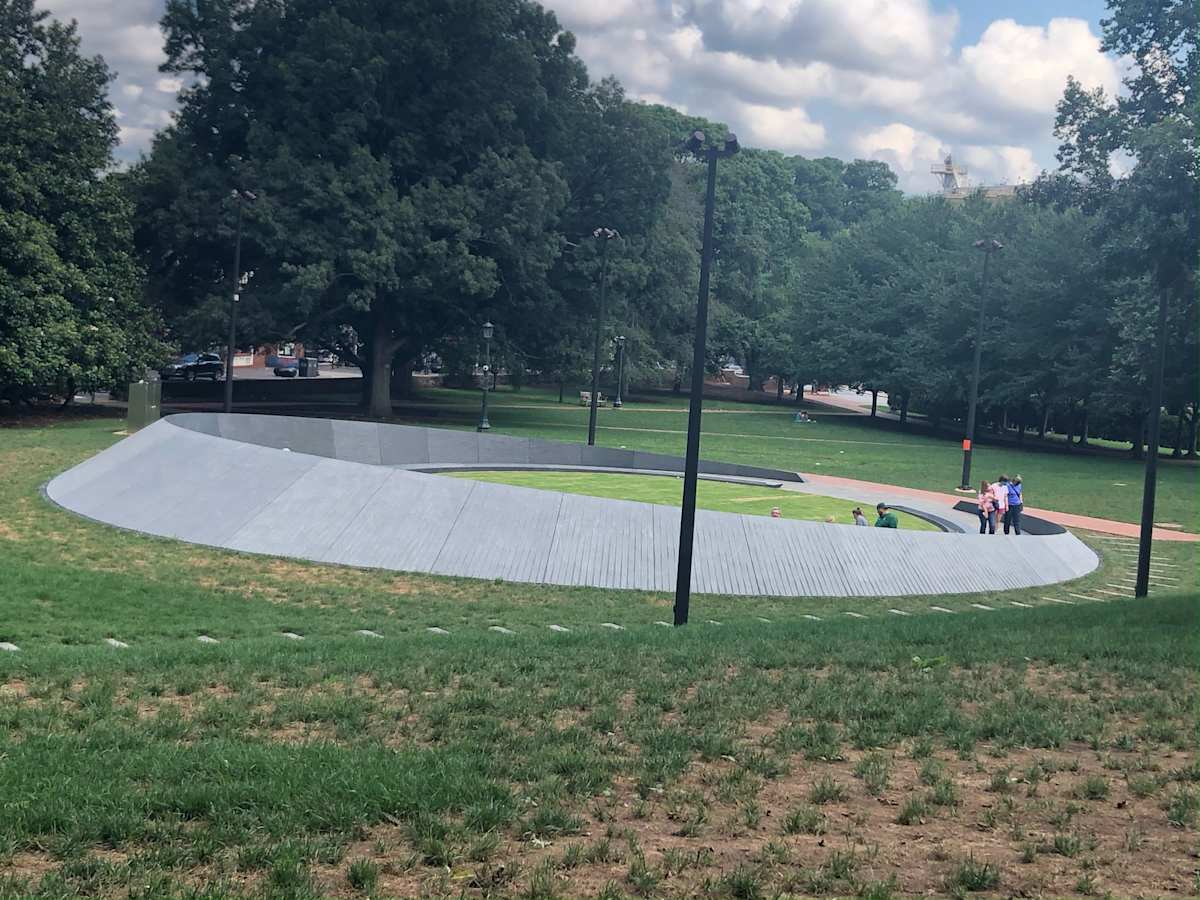
(UVA Memorial to Enslaved Laborers, August 2020. Photo Credit: Marlene L. Daut)
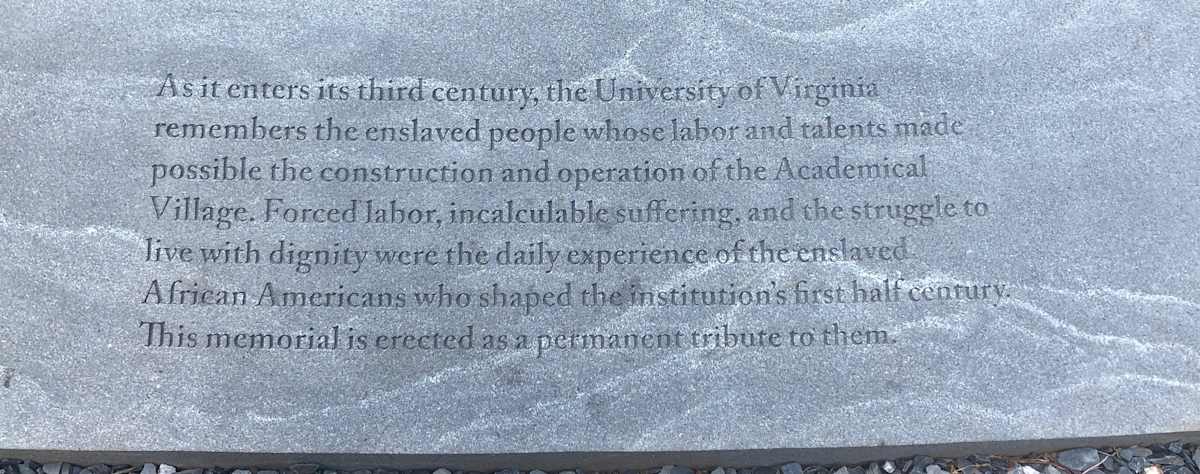
(A plaque on the monument to the Enslaved Laborers, August 2020. Photo Credit: Marlene L. Daut)
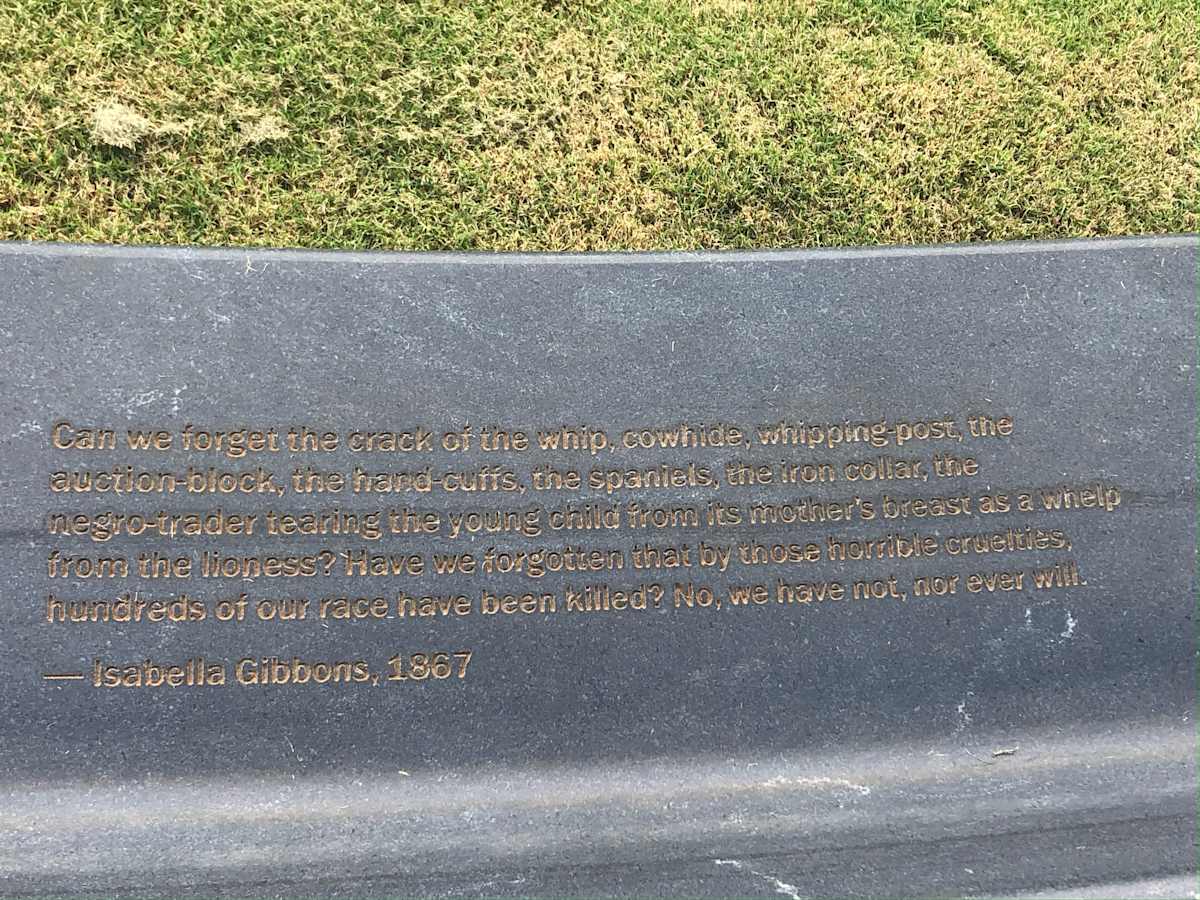
(Damning 1867 quotation from Isabella Gibbons, a woman formerly enslaved at UVA, August 2020. Photo Credit: Marlene L. Daut)
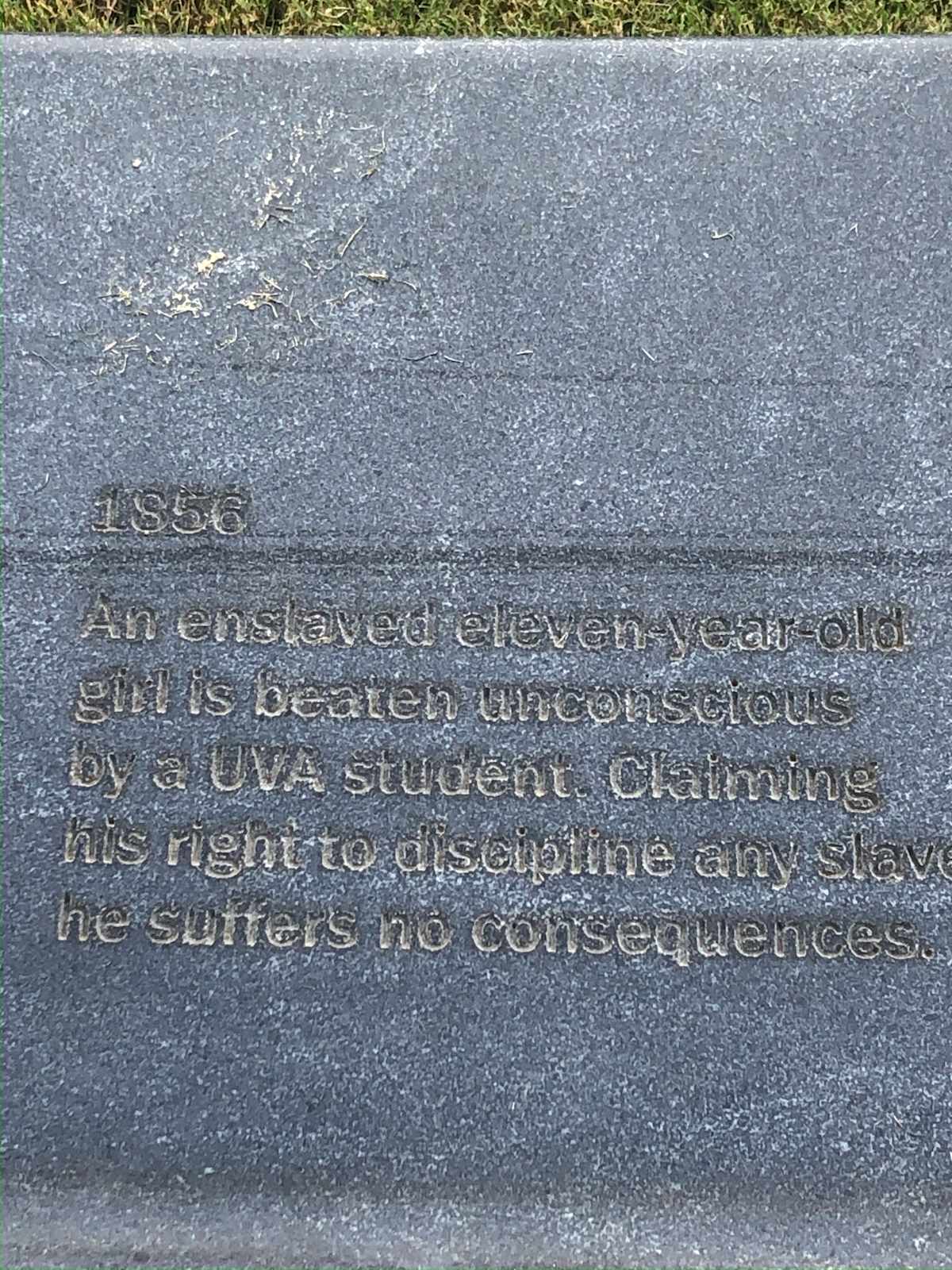
(Testament to the awful violence experienced by an enslaved Black girl beaten by a UVA student, August 2020. Photo Credit: Marlene L. Daut)
How to cite this essay: Marlene L. Daut, "What is the American Declaration of Independence at 250 to Me?" King of Haiti's World Blog, April 3, 2026. <https://marlenedaut.com/blog/what-is-the-american-declaration-of-independence-at-250-to-me-by-nbsp>