By MARLENE L. DAUT
For the 250th anniversary of the American Declaration of Independence, I have had the pleasure of participating in several colloquia and now a scholarly collection. The American Revolution at 250, edited by Frank Cogliano, will be published by the University of Virginia Press on April 3, 2026.
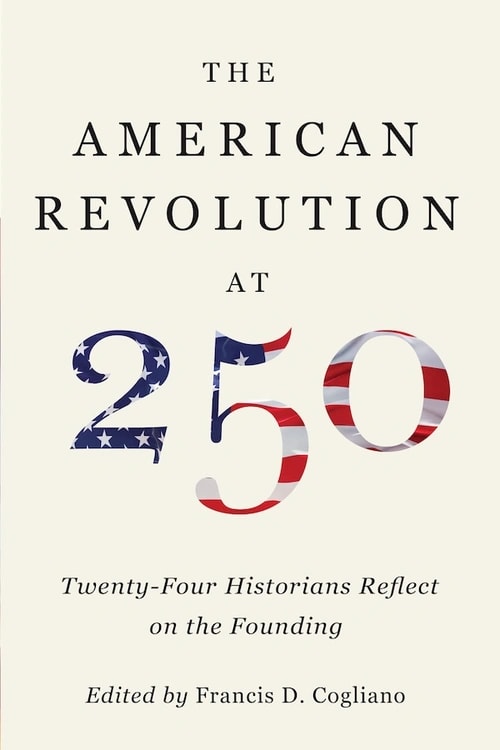
My essay within the volume, “What is the American Declaration of Independence at 250 to Me?”, which draws its title from Frederick Douglass’s famous speech “What to the Slave is the Fourth of July?”, gave me the occasion to ruminate on an event that has largely fallen out of popular consciousness: the white supremacist invasion of the city of Charlottesville—home to the University of Virginia, where I happened to be teaching at the time—on August 11 and 12, 2017.
I hesitate to give too much away about the contents of my article, but let’s just say that I mince no words when it comes to ongoing attempts (much of which emanate directly from the University of Virginia itself) to paper over what one scholar has aptly called the "Summer of Hate"—attempts that are not at all dissimilar to the historical way that many have sought to downplay Thomas Jefferson’s (founder of UVA) past as an enslaver of human beings. I encourage you to read all the essays in the volume, however, as others surely disagreed, and the goal of the book is to open up conversations about the meaning of the 250th anniversary, not close them down. Indeed, as contributors, we engaged in spirited debate in a May 2024 gathering that took place at the International Center for Jefferson Studies.
Yet, I must still ask, on the eve of the 250th anniversary of the formal start of the American Revolution, who and what gets to be celebrated in the United States? I will never stop asking or insisting that we tell fuller stories of the history of this country. To that effect, there is another anniversary deserving of celebration this year too: the 100th anniversary of the Schomburg Collection at the New York Public Library.
I had the absolute honor and delight to be invited to contribute to a volume commemorating the important moment when the Puerto Rican bibliophile, writer, and scholar Arturo Schomburg’s papers arrived at the 135th Street Branch of the NYPL. Edited by Barrye Brown, Laura E. Helton, and Vanessa K. Valdés, Black Studies on 135th Street: The Founding and the Future of the Schomburg Collection will be published on April 21, 2026 by Yale University Press.
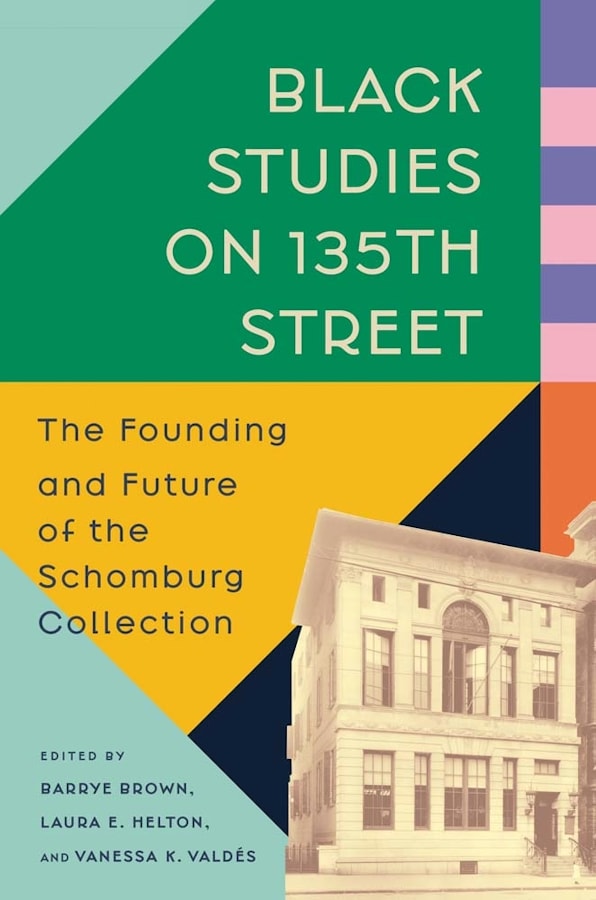
The premise of this collection is to illuminate both the astounding collecting practices of Schomburg himself and his incalculable contributions to Black intellectual history through his essay, newspaper, magazine, and journal writing, along with his editorial work. In a sense, the entire volume probes an unanswerable question: where in the world would Black Studies be today without Arturo Schomburg, and more concretely, without the vast archival documents he left behind?
I know scarcely a scholar of Black Studies, Caribbean Studies, Latin American Studies, (and even American Studies!) who has not found occasion to consult the Schomburg collection in Harlem. Scholars from across the Black diaspora and all those studying its formation and legacies regularly make the pilgrimage up to the Schomburg Library to consult the nearly 3,000 volumes and over 1,100 pamphlets that make up the Schomburg collection.
My contribution, “Arturo Schomburg Digs up the Kingdom of Haiti’s Past,” drawing its title from Schomburg’s famous essay, “The Negro Digs up His Past,” attempts to shed light on the Puerto Rican bibliophile’s enduring and longitudinal interest in collecting rare manuscripts from Haiti. In addition to the Baron de Vastey’s Le Cri de la patrie (1815), which I have previously written about on this blog, Schomburg collected three additional works authored by Vastey, one in the French original and the other two in English translation: Reflexions on the Blacks and Whites (1816, trans. 1817), Réflexions politiques (1817), and An Essay on the Causes of the Revolution and Civil Wars of Hayti (1819, trans. 1823). Schomburg also collected other documents produced in the kingdom of Haiti, such as Juste Chanlatte’s exceedingly rare Recueil de chants et de couplets à la gloire de leur majestés et de la famille royale d'Hayti, etc. etc. etc.: a l'usage de la cour et des Haytiens and Haiti’s yearly almanacs.
This level of deep collecting illustrates Schomburg’s patently intellectual rather than merely passing recognition of the importance of Haiti’s early print culture to Black American culture. Schomburg was, in fact, somewhat of Christophean. In “Henri Christophe: King of Haiti,” a two-part article that Schomburg published in Looking Forward in May and June 2025, respectively, Schomburg sang the praises of both Vastey and Christophe.
First acknowledging that “Baron de Vastey may not be cherished as a great man of letters,” Schomburg insisted, “we must honor the fact that with his limited knowledge in the projected field of Haitian literature, he defended his country from the onslaughts of the French press in publications now extant.” In his voluminous writings, Vastey, whom Schomburg called “a product of [the] burning and crushing civilization that came to life from slavery during those days that followed the sad throes of the French Revolution,” had “stood up manly and courageously against the professed European Christians.”
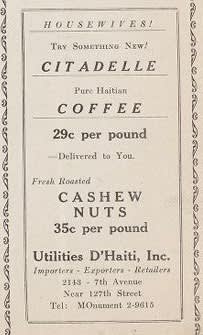
(Advertisement for Haitian coffee and nuts in the June 1935 issue of Looking Forward)
Schomburg had almost nothing but praise for King Henry too. “Christophe was born at a time when the West Indies was the battle ground of Europe’s great moves for empiric dominions,” Schomburg observed. “Yet the West Indies gave birth to a warrior, a statesman and a king: a man the world some day will find time to deservingly honor, who served in the American Revolutionary War against Albion legions at the siege of Savannah.” Acknowledging that “History has calculated Christophe’s character in severe form,” Schomburg could not but help to insist upon “the loving kindness and home life of a really Christian man who was associated with the eminent tribune William Wilberforce.”
Schomburg seemed particularly incensed, in fact, that the French had performed quite a negative number on Christophe’s reputation. He observed, “they have painted him in the worst colors imaginable.” Yet Schomburg could not be dissuaded from his general adulation. “This Black king,” Schomburg wrote, “should be considered one of the most outstanding characters in the New World, the most remarkable product from the cauldron of slavery.”
In the Citadelle Henry (Laferrière), often referred to as the “eighth wonder of the world,” Schomburg likewise saw not a symbol of the king’s exploitation of Haitian laborers, but the “greatest memorial,” the place where Christophe was “spiritually embalmed,” and a monument to Haitian independence that would be better understood in a future epoch, “when the black men of America can find time to study and read the achievement of his forbears prowess.”
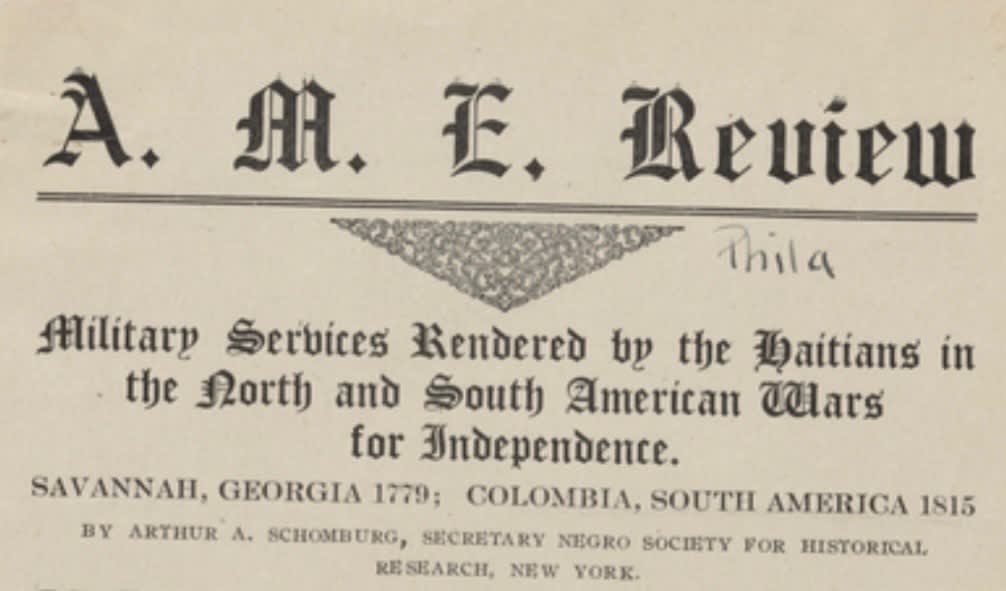
(In this April 1821 article, Schomburg wrote about Haiti's contributions to both the American Revolution at the Battle of Savannah in 1779 and the Venezuelan freedom fighter Simón Bolívar's Wars of Independence from Spain in 1815 and 1816)
Schomburg’s incomparable collection of documents from Haiti, like his prolific writings, offer us not only a material argument for more fully appreciating and understanding the relationship of Haitian history to US history, but also very specifically, an encouragement to take a deeper look at what we might learn about the history of Black America by probing US connections to the Kingdom of Haiti. For, what does it mean that Schomburg repeatedly sought to dig up this part of Haiti’s past? To answer this question, we need to, as Schomburg clearly demonstrated, not simply read about the kingdom of Haiti but from the kingdom of Haiti.
How to cite this article: Marlene L. Daut, "Haitian Studies is Black Studies (and vice-versa), and Why Both are Vital to Understanding US History," King of Haiti’s World Blog, February 22, 2026. <https://marlenedaut.com/blog/haitian-studies-is-black-studies-and-why-both-are-vital-to-understanding>
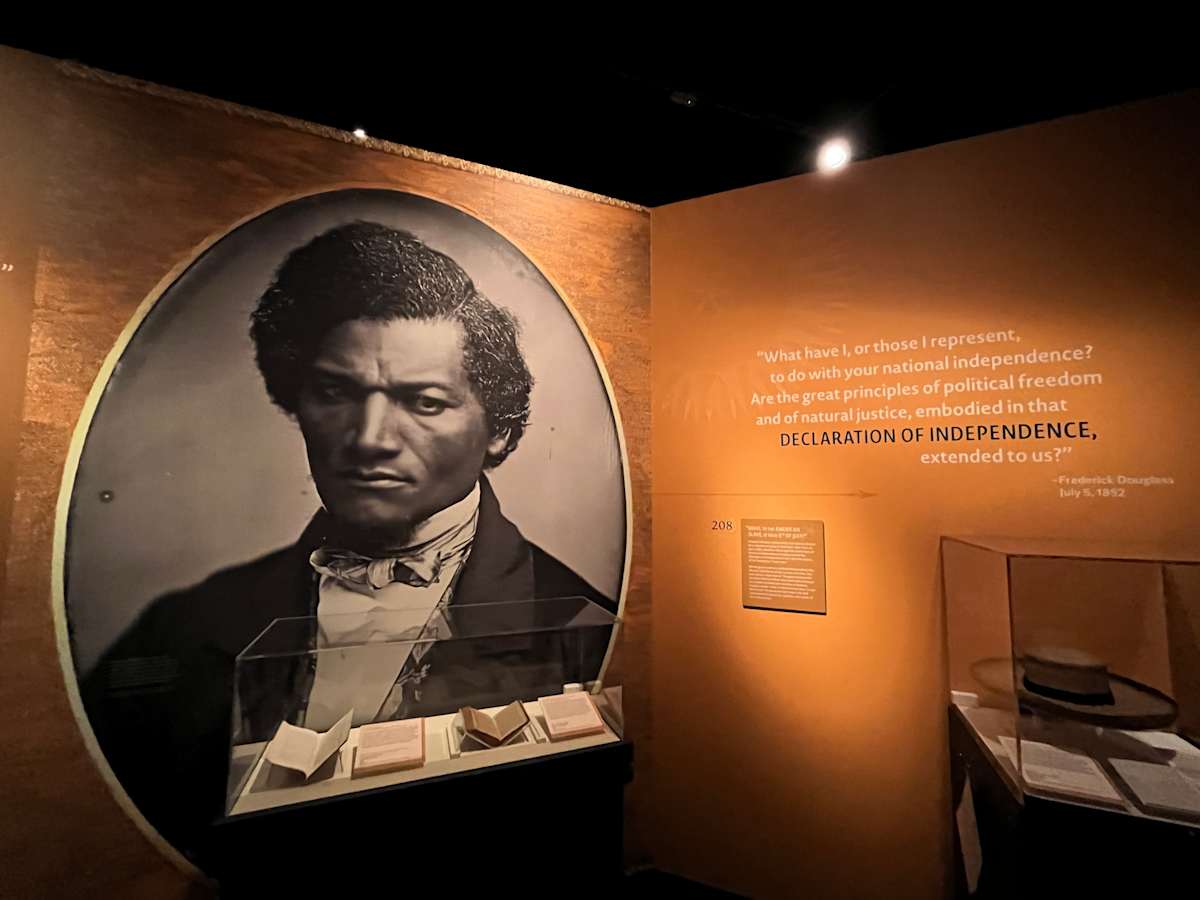
Title image from Frederick Douglass section of "The Declaration's Journey," on exhibit at the Museum of the American Revolution in Philadelphia, PA. Photo Credit: Marlene L. Daut